← All case studies & field guides

Field guide · Refrigeration · Preventive maintenance

What to look for on your rooftop units.

When refrigerant leaks out of a rooftop unit, compressor oil leaks out with it — and topping off the refrigerant doesn't put the oil back. Most of the warning signs are visible on a simple walkthrough. Here's what to look for, with photos from a recent one.

Equipment
Packaged rooftop units & condensing units
Time
About 10 minutes per unit
Tools
Flashlight, phone camera, gloves
When
Every PM visit, and before cooling season

What we found

The owner had replaced a rooftop unit compressor two years earlier, so we walked their large packaged rooftop units with a closer eye.

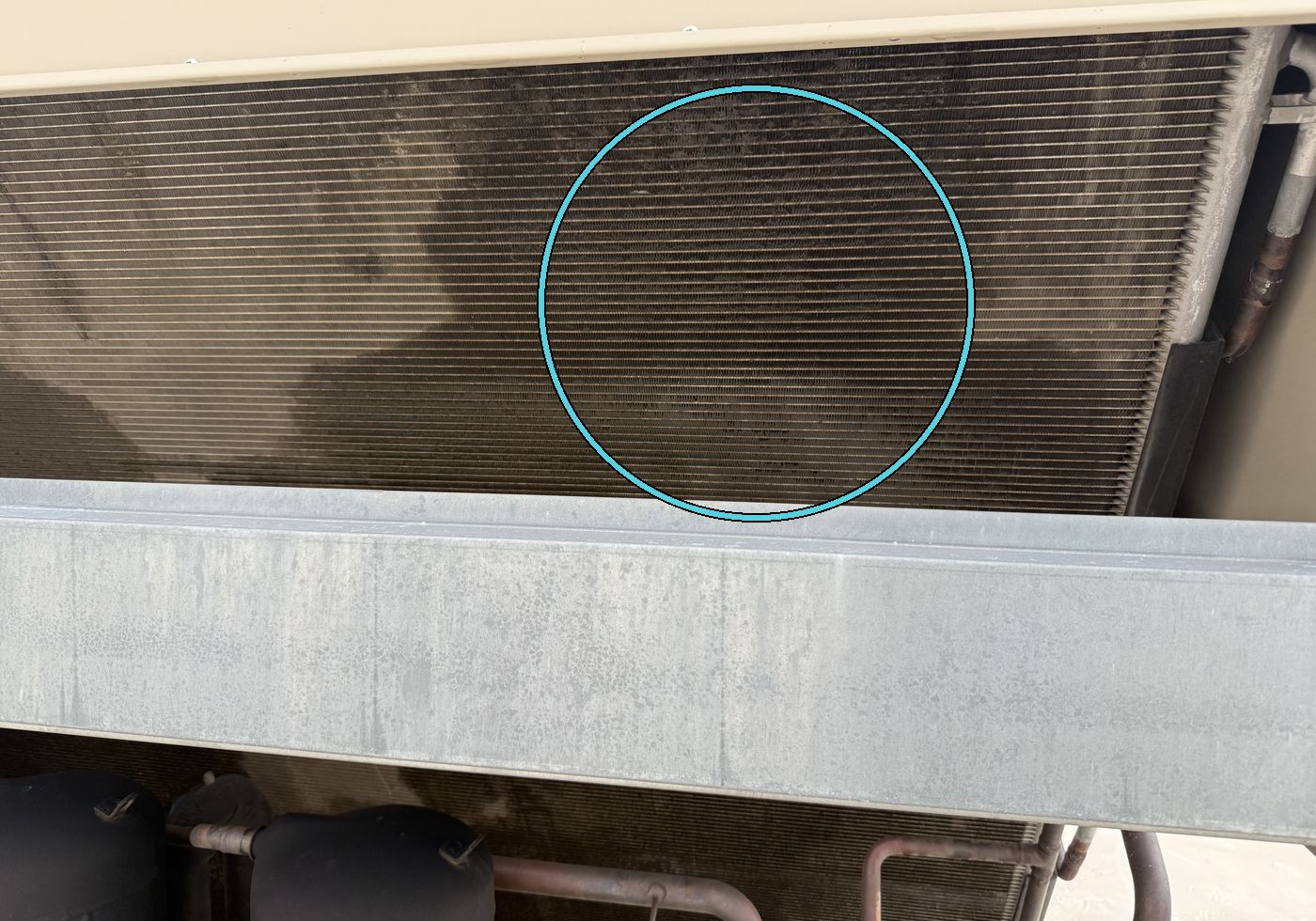
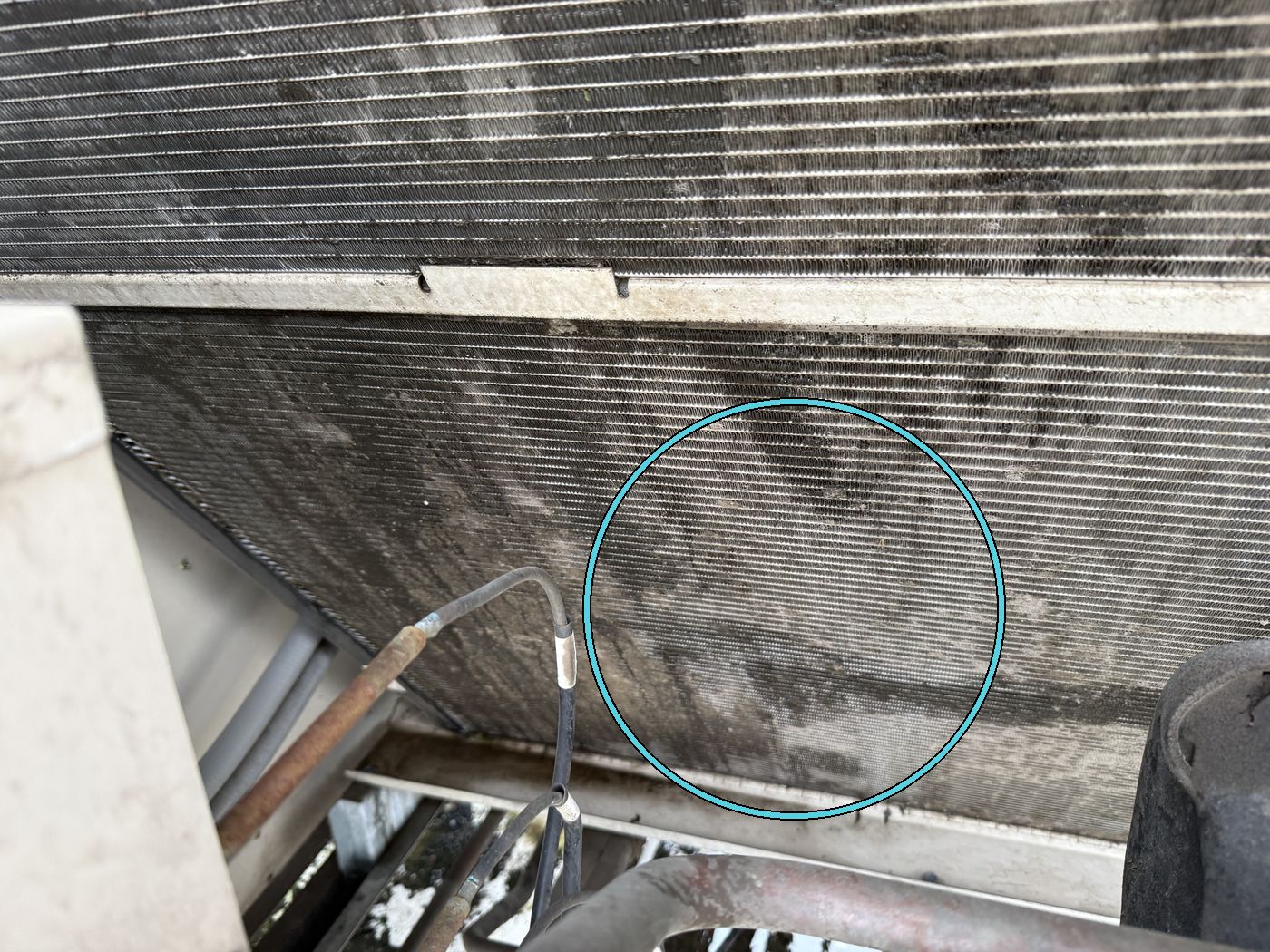
On this one, the condenser coil had dark, oily staining across its lower section. One compressor's oil sight glass showed oil about halfway up. Another's showed no oil at all — a compressor on its way to failing. The owner had their contractor add oil before the unit ran for the summer.
Why the oil goes missing

A compressor's oil doesn't stay in the compressor. A small amount always travels around the system with the refrigerant and comes back. When the system develops a leak — often in the condenser coil — refrigerant escapes and carries oil out with it. The refrigerant evaporates; the oil stays on the coil, collects dirt and leaves a dark stain.

That oil never returns to the compressor. A service call that adds refrigerant restores the charge but not the oil, so each leak-and-recharge cycle leaves the compressor with less. Eventually it runs dry, and a scroll compressor running without oil fails — usually on the hottest day of the year.

Refrigerant doesn't get used up. A sealed system should never need more. If refrigerant has to be added, there is a reason — almost always a leak. The same goes for a failed compressor: replacing it fixes the symptom, but unless someone finds out why it failed, the new one is running under the same conditions that killed the old one. Always ask why.

1Oily stains on the condenser coil

Look for dark, blotchy patches that stand out from the even layer of dust on the rest of the coil, often low on the coil where oil collects. These are the most common visible sign of a refrigerant leak.

Condenser coil with dark oily staining in the center section
Dark staining concentrated in one area of the coil.
Lower condenser coil with dark oily staining near the bottom
Oil and dirt collecting low on the coil.

Oil or just dirt? Mildew and dirt from rain or condensate can look similar. Oil residue is localized, darker than the surrounding coil, feels slick and doesn't rinse off with water. A stain is a reason to ask for a leak check, not proof of one — your technician confirms with a leak detector.

2The compressor oil sight glass

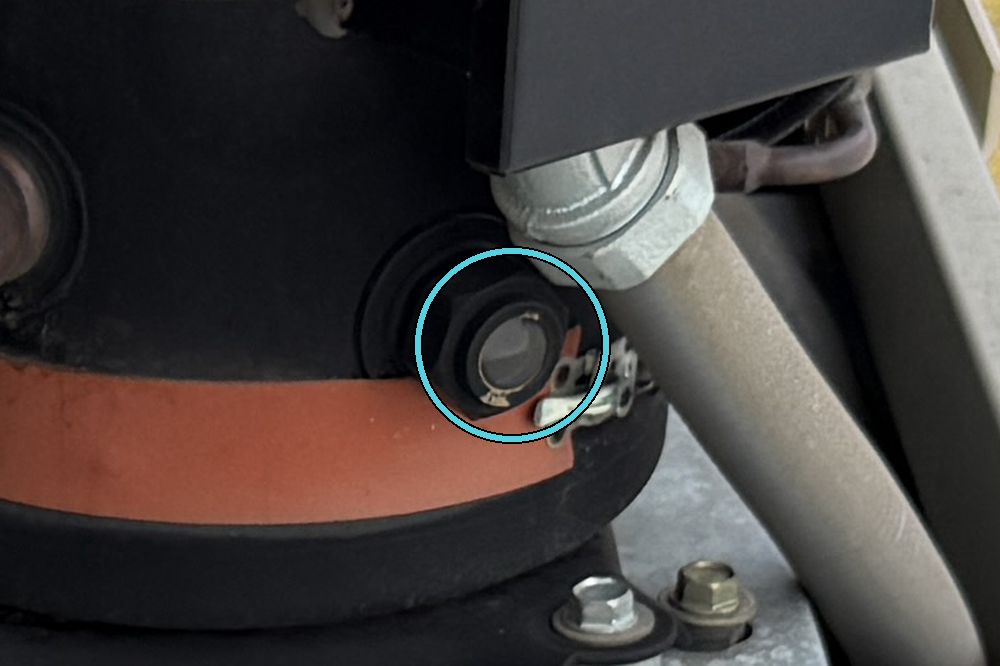
Many larger scroll compressors — especially paired or "tandem" compressors — have a small window low on the compressor shell that shows the oil level. With the compressor running, oil should be visible in the glass, within the manufacturer's range (commonly between about ¼ and ¾ of the glass). An empty glass means the compressor is short of oil and should not be left to run that way.

Compressor oil sight glass showing oil about halfway up
Healthy: oil visible about halfway up the glass.
No oil visible in the glass Illustration
Problem: the second compressor on this unit showed no oil at all.
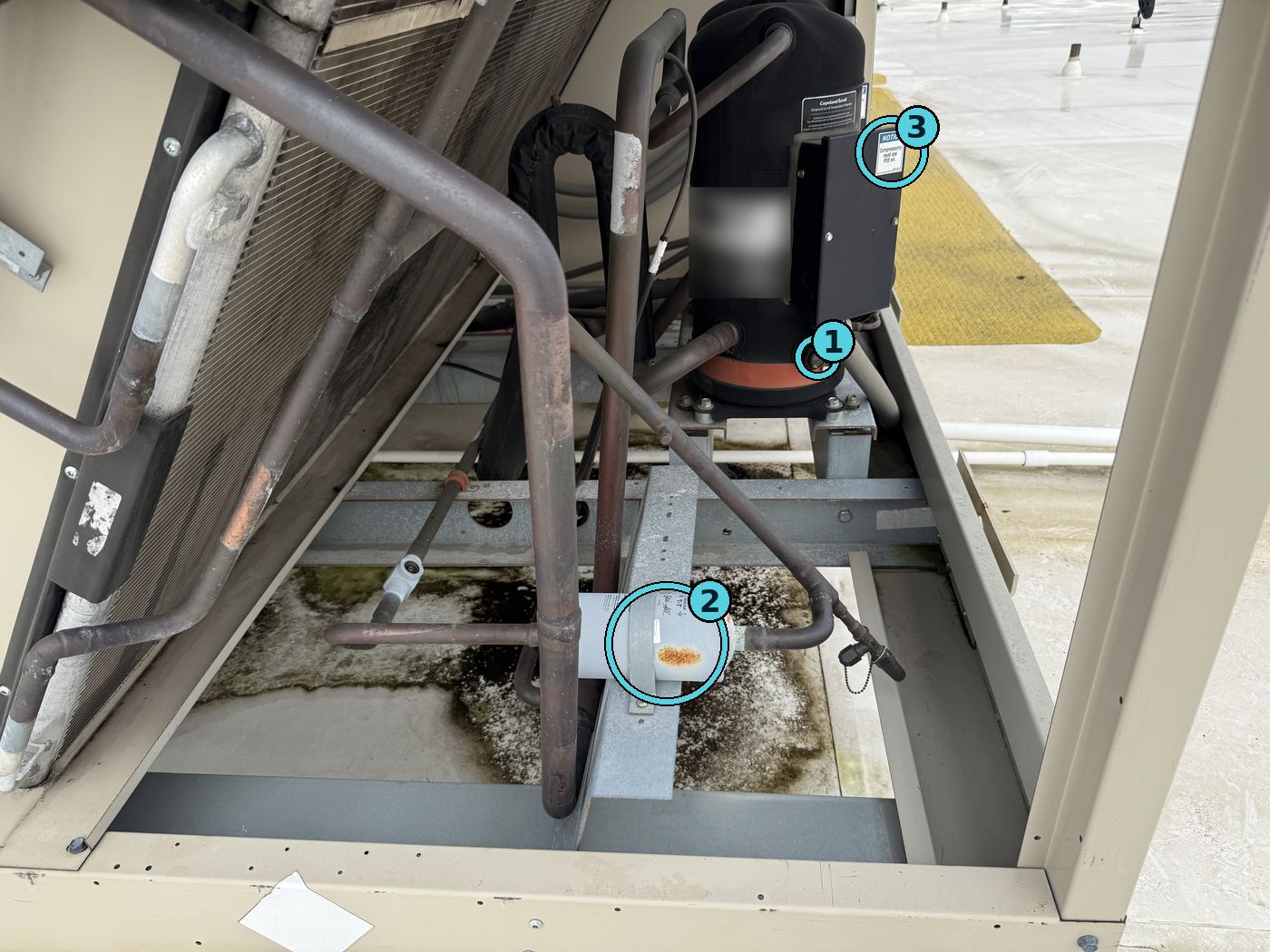
Rooftop unit compressor compartment with callouts
Where to find it:
  1. Oil sight glass — low on the compressor shell, just above the crankcase heater band.
  2. Filter drier — surface rust on the shell. Corrosion on driers and piping can become the next leak point.
  3. Oil type label — this compressor requires POE oil. Oil added must match.

Not every compressor has an oil sight glass; many smaller units don't. On those, the coil stains in item 1 are your early warning.

3The liquid-line sight glass and moisture indicator

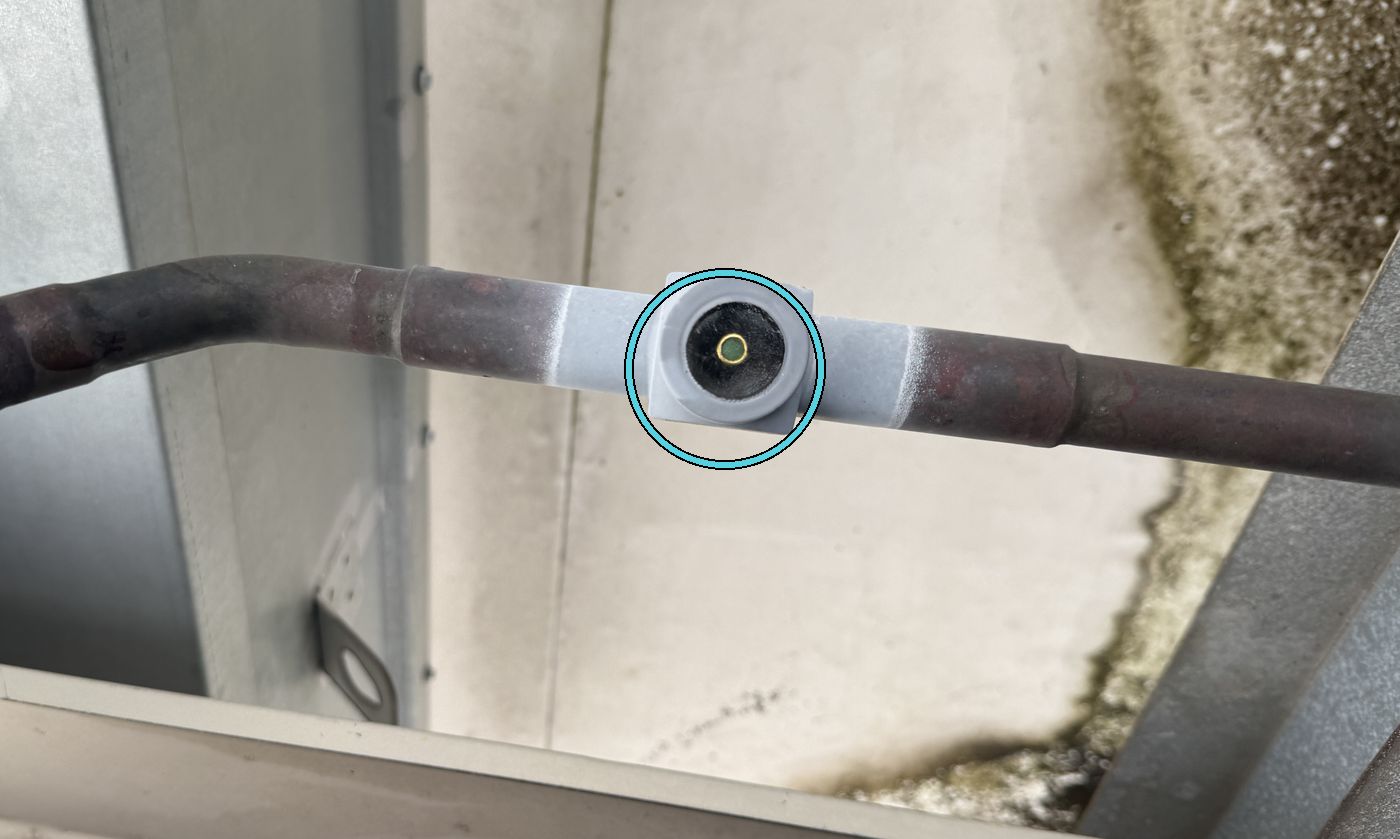
This window on the refrigerant liquid line has a colored dot in the center that shows whether moisture has gotten into the system.

Refrigerant liquid line sight glass with green moisture indicator dot
Green indicator: refrigerant is dry.
Green — dry. This is what you want to see. Yellow — moisture in the system. Call your contractor.

Moisture matters because modern compressor oils (POE) absorb water and form acids that attack the compressor's motor windings. A leak is one way moisture gets in. Steady bubbling in this glass after the unit has been running for a while can also point to low refrigerant charge — let your technician diagnose that one.

4Piping, joints and service ports

5The nameplate

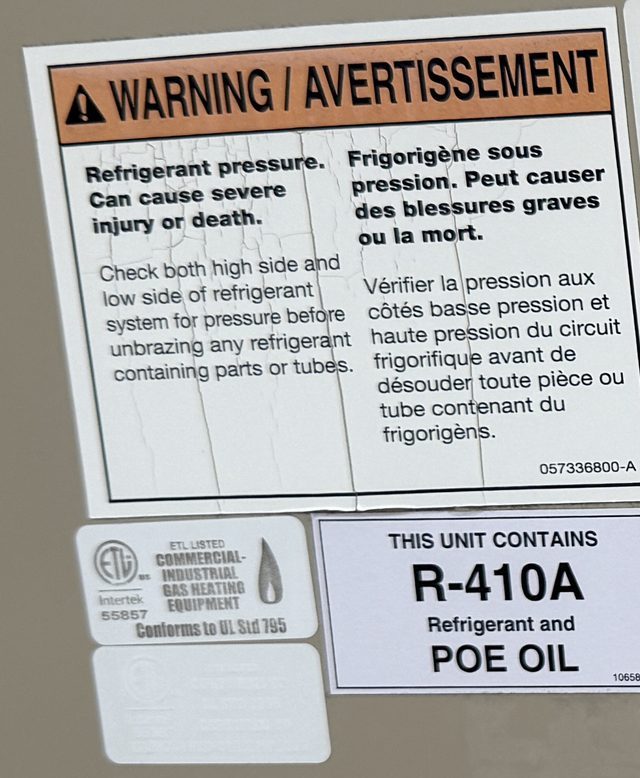
Before you call anyone, read the labels on the unit. They tell you the refrigerant type and the oil type, so you can confirm the right oil goes back in after a repair.

Unit label reading This unit contains R-410A refrigerant and POE oil
This unit: R-410A refrigerant and POE oil.

If you find something

None of these are owner repairs, but all of them are worth a call. When you do, ask your contractor to:

Look, don't touch. Rooftop equipment has rotating fans, high-voltage electrical and pressurized refrigerant. Follow your roof access and fall-protection rules, keep clear of fans, and leave panels and refrigerant work to licensed technicians. If the compressor compartment needs a panel removed, ask your service tech to show you on their next visit.

Related: Retro-commissioning · Owner's representative · Bluefin Intelligence — continuous visibility into how equipment runs between service visits.

Something in your building not adding up?

Let's find out why — and fix it.

Tell us what's going on, what's been tried, and who's involved. We'll tell you how we'd approach it.